A Bee in the House
and Other(wise) ways of being
Charmaine Lurch
September 12th – November 7th, 2026
Main Gallery
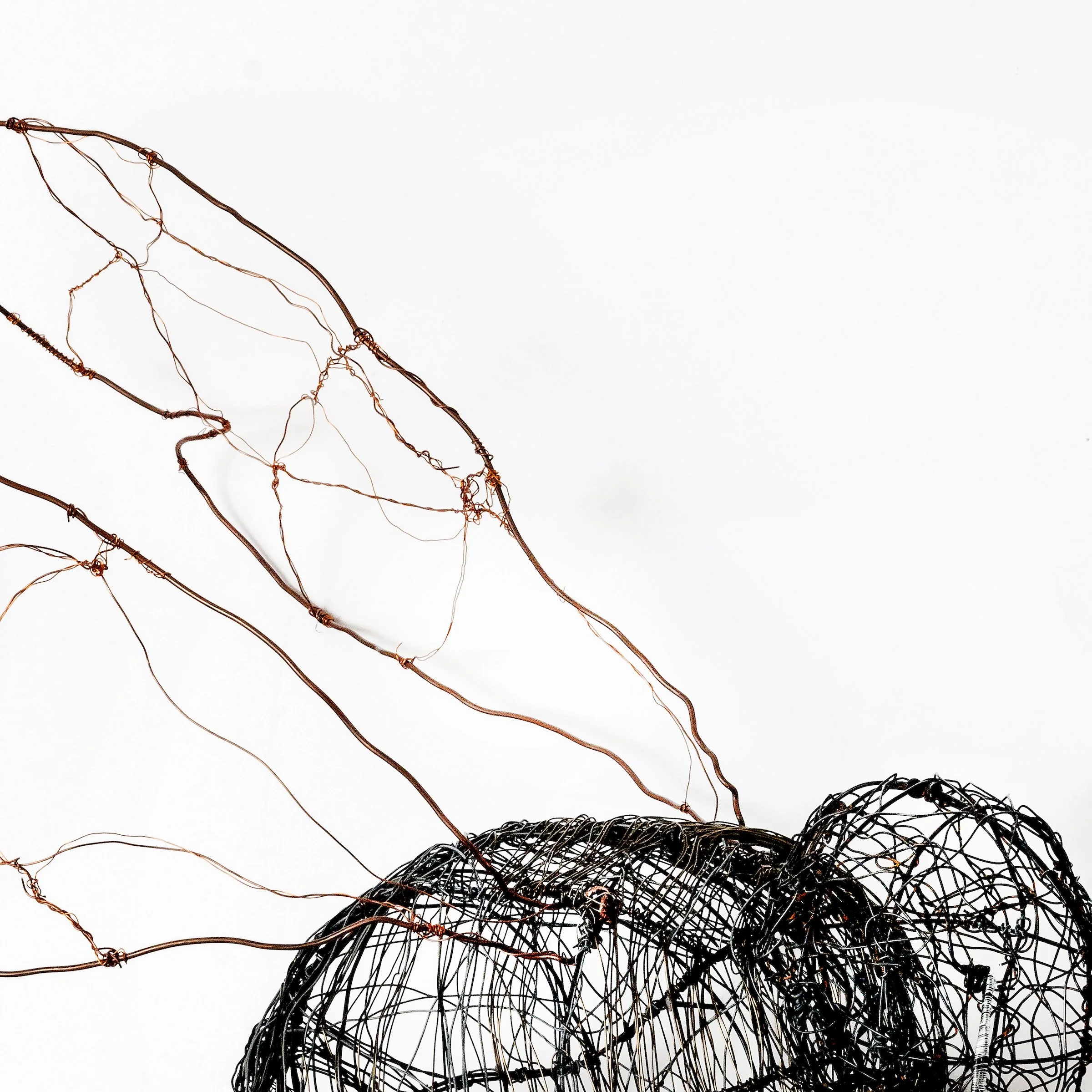
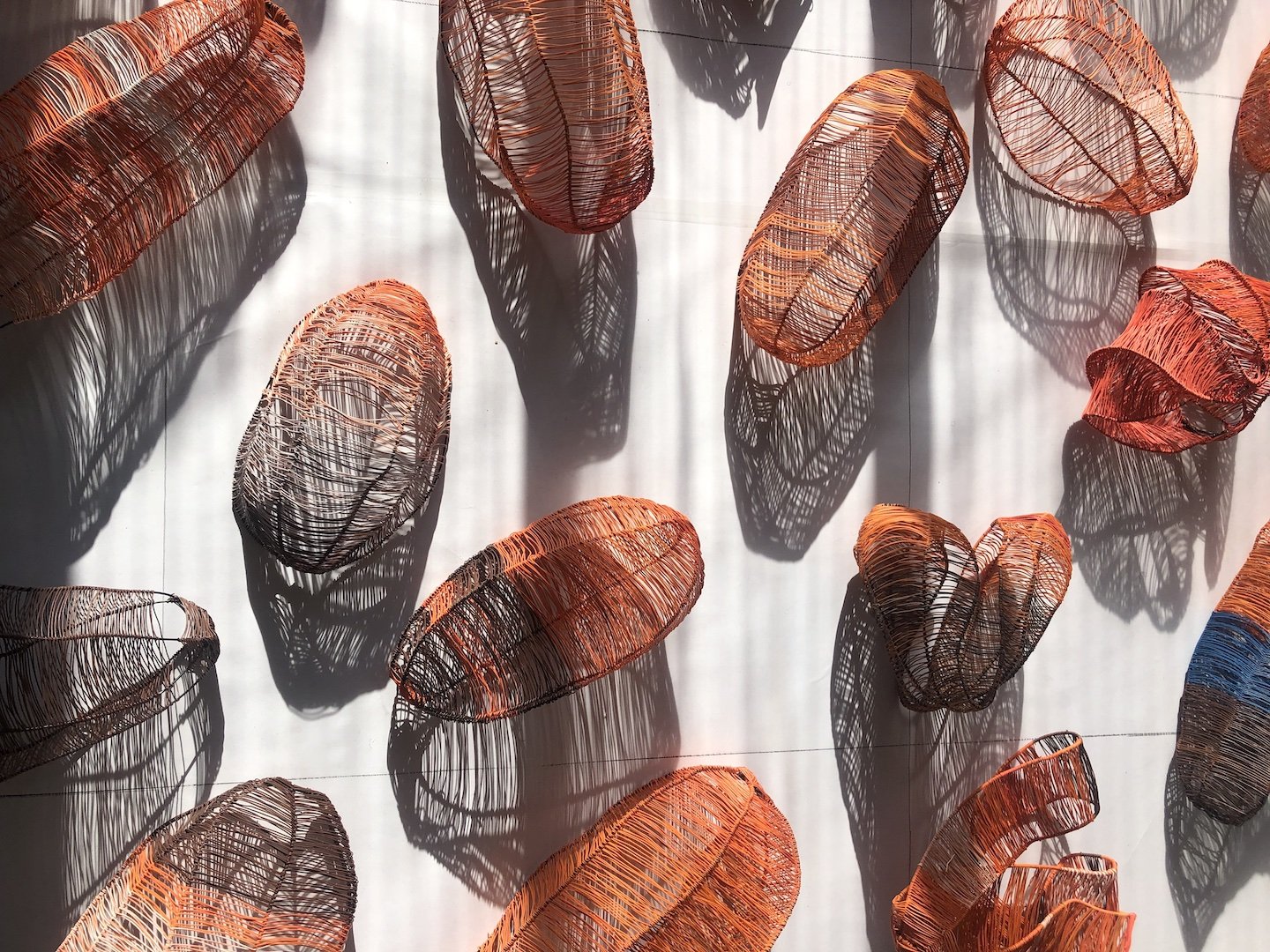
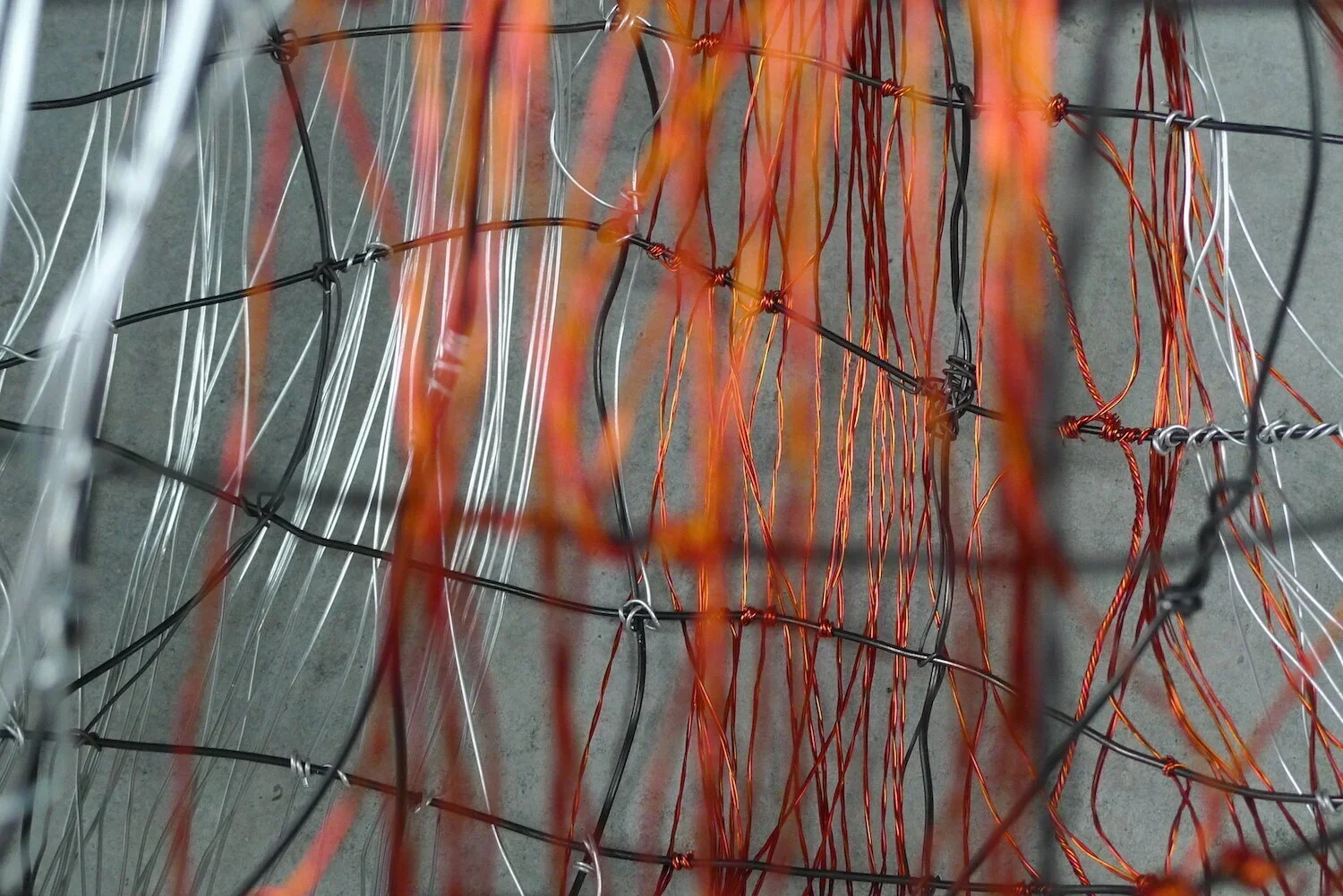
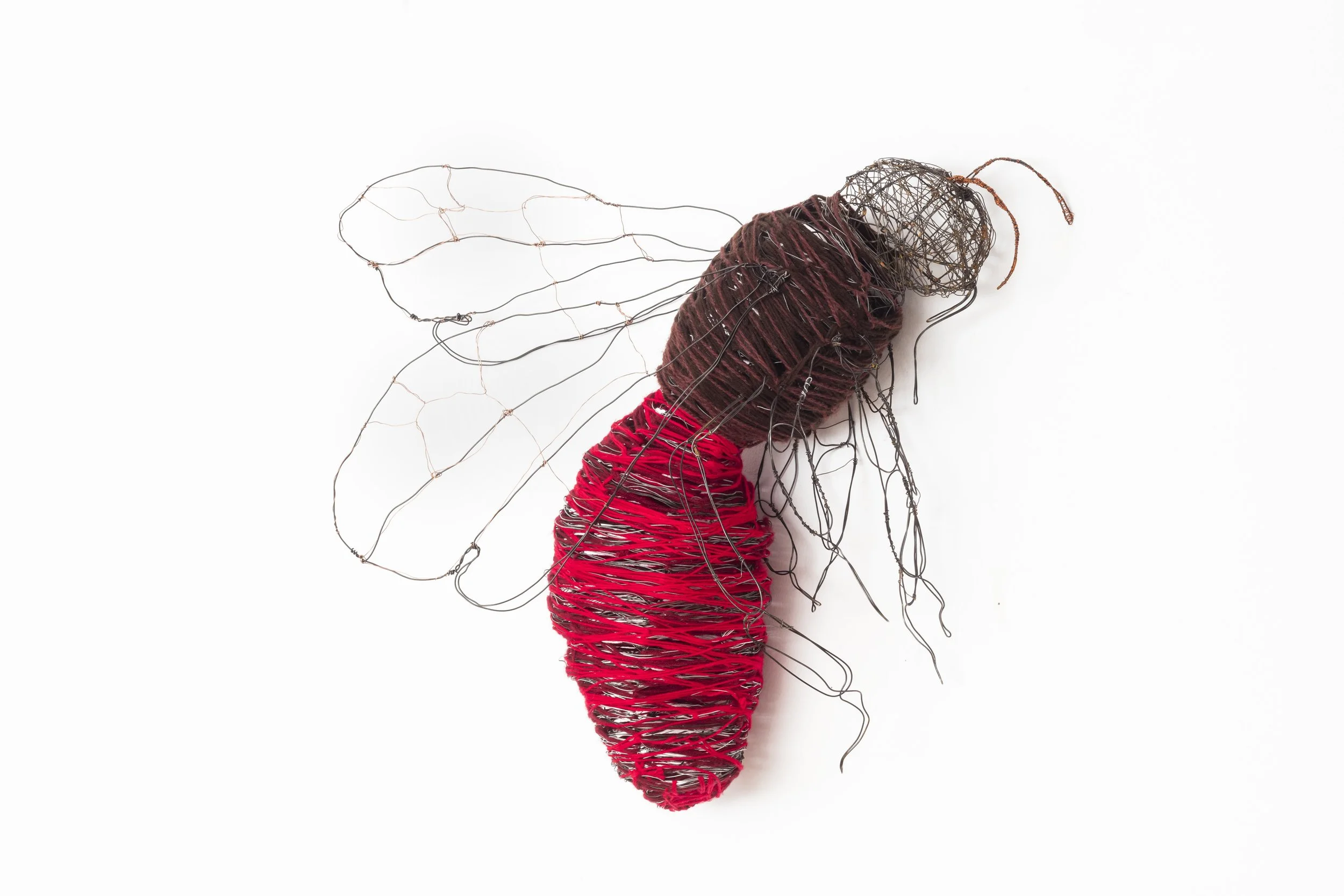
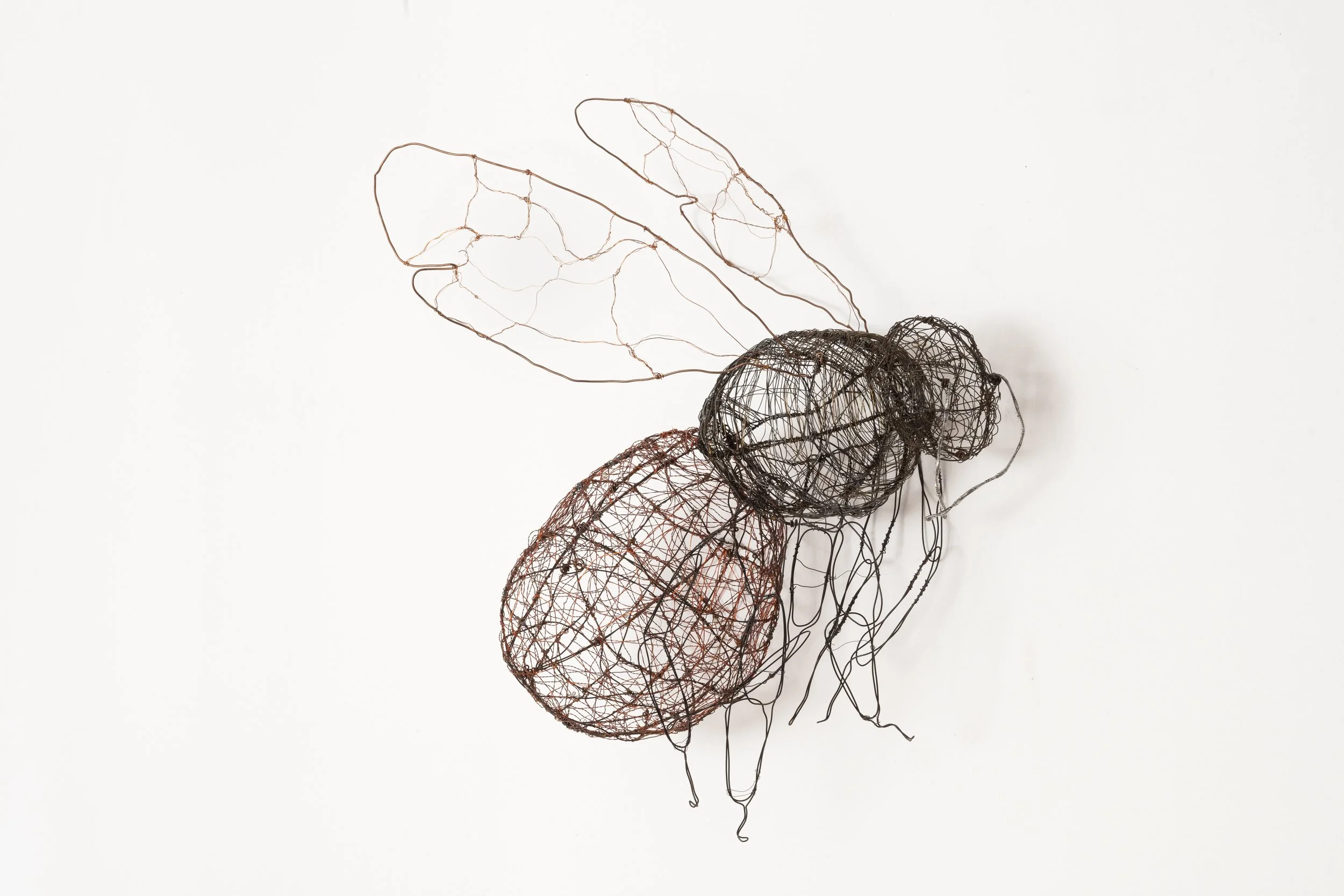
As a Caribbean-Canadian conceptual artist, Charmaine’s work draws attention to the complex relationships between culture, nature and place, inviting entry points into urgent racial, ecological, and historical matters. Working across drawing, painting, wire sculpture and installation, she explores the relationships between Black life and environmental relations. Ideas of rest, happiness, movement, and connection extend through the materials, not simply as a vehicle for an image or idea, but as active participants in the work. They become a way of thinking: wire draws a line in space, traces connections, and holds the tension between structure and movement; natural forms such as seeds, pollen, and bees give insight into how life moves, adapts, and remains.
By shifting the scale of the work, and translating them through wire, we can perceive the complex networks and interdependence that sustain both human and more-than-human life. The bees, pollen/seeds sculptures illuminate these beautiful and life-sustaining organisms. Material constructions alongside light and the shadows further a quiet conceptual narrative. They suggest that no life exists entirely on its own. At the core, these works ask, how might we learn to see differently? And what kinds of worlds become possible when we do?
Charmaine Lurch
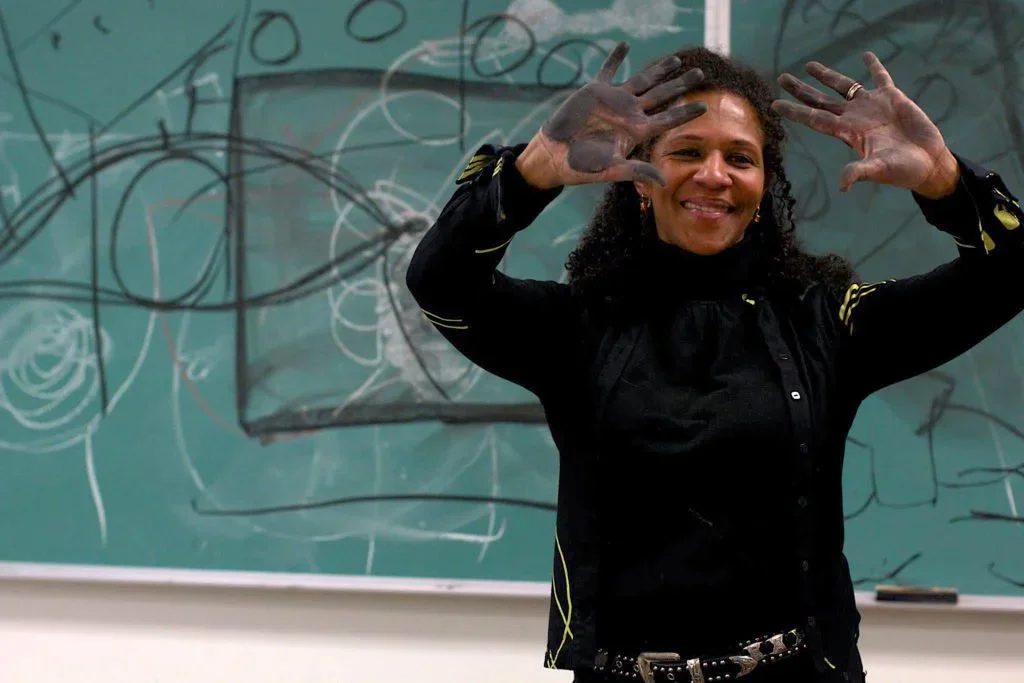
Charmaine Lurch is a Caribbean Canadian conceptual artist whose multi-modal practice spans sculpture, installation, drawing, performance and public art. Grounded in Black geographies and ecological justice, her work explores relationships between human and more-than-human life, through materials such as charcoal, wire, steel, as well as the use of light, and shadow. Lurch’s work has been presented at major institutions including the Royal Ontario Museum, the Montreal Museum of Fine Arts, the Art Gallery of Jamaica, and the Art Gallery of Ontario, and appears internationally through institutions such as Global Affairs Canada. She is a professor at Humber College in the Faculty of Media, Creative Arts, and Design, and an arts education specialist committed to community-engaged, interdisciplinary learning.
Acknowledgements
To Katherine McKittrick, for seeing the work, giving it language, revealing nuanced relationships and entanglements, and inspiring me to draw-out-side and wonder anew. Thank you to The Revolutionary Demand for Happiness Residency for the space to rest, think, and write; to the Black and African Feminist CRCs at Queen’s University; and to Katherine McKittrick, Grace Adeniyi-Ogunyankin, Yolande Bouka, Kristin Moriah, Kai Trotz, Alyssa Vernon, Juliane Okot Bitek, Yasmine Djerbal, Maddi Andrews, Anita Ragunathan, and Lakith for your generosity during the residency and for supporting the exhibition.
Thank you to Laurence Packer, Cole Swanson, Phillip Dwight Morgan, Cynthia Lurch, and Anne Marie Roberts for your contributions of bees, pollen, wrapping, and poetry; and to the friends and neighbours who contributed to the wire work.
My gratitude to Agnes Etherington Art Centre, the Centre for Black Studies, and Cultivate Art Commons for generously supporting the exhibition of this work.
Finally, giving thanks for the moon, water, flowers, bees, turtles, and trees. Even the mayflies, who helped sharpen my attention to aerial spatial presence and to how to move around and away from unpleasantness; and to the dead grey moth laying on the stairs of the Robert Sutherland Building, who marked my daily return and then disappeared on my final day as I quietly entered.